This guy!
Deserves all the recognition he gets. Sounds even better in person. (h/t ZS).
And that moment at the end of the clip, when he recognizes the connection made when he creates a smile: amazing. And the reason why public space and public art are vital, and environments sans either are rather life-denying.
Showing posts with label Transit Experiences. Show all posts
Showing posts with label Transit Experiences. Show all posts
January 13, 2011


In a station of the metro
The apparition of these faces in the crowd;
Petals on a wet, black bough.
The woman who drives the route 21 southbound bus that arrives at Railroad and San Ramon Valley Blvd at 7:55, weeknights, has the nicest smile of any bus driver in the Bay Area. She doesn't say anything, but she always smiles. I only ride that route once, maybe twice a week--only when my tutoring sessions at the Library end at 7:40ish--so I have yet to ask her name. But I think we recognize each other now; I always board at the same stop.
My sister has just pronounced riding the bus in Danville, "weird." This from a young woman who rides the bus on a mostly weekly basis in Salem, Oregon, where she is a carless college student with an off-campus internship. And her mindset is common, perhaps endemic in car-dependent places like Danville, where children are raised in the backseat of automobiles. That's what I was used to; I had never set foot in a Danville bus before last August and the thought of waiting at the bus stop, or of actually being a bus rider (who are those people!) gave me the howling fantods. Especially the kids who used to take the bus to school. They were a tainted race. Habits! Habits die-hard.
The 21 driver picking up at BART at 6:00 asks his regulars: "did you leave a phone on the bus last night?" Dissenting answers. The time nears 6:00, one more man boards, and the answer is "yes!" An explosion of good cheer as giver and getter of good deed meet.
According to my dentist, I am truly my "father's son" because we are the only two patients who ever bike to appointments. I feel like a role player in an ensemble cast. "The bike guy." Better: "Biking son of biking dad." My students think of me that way too, as some kind of interesting local flavor: perplexed that I ride the bus, astonished that I bike so far! (3 miles) when it is so cold! (like 40). But then they soften it with, well, it probably saves money on gas. And I add, I like to read and doze on the bus. Hmm, they say. Yeah.
A man sitting behind me on the bus ride home (woman with the smile at the wheel) answered his phone. "Hello. I'm on my way. I'm doing the best I can so don't bitch at me thank you bye bye."
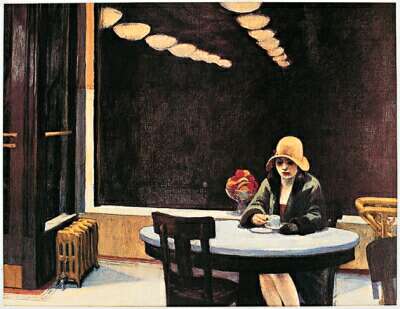
Petals on a wet, black bough.
The woman who drives the route 21 southbound bus that arrives at Railroad and San Ramon Valley Blvd at 7:55, weeknights, has the nicest smile of any bus driver in the Bay Area. She doesn't say anything, but she always smiles. I only ride that route once, maybe twice a week--only when my tutoring sessions at the Library end at 7:40ish--so I have yet to ask her name. But I think we recognize each other now; I always board at the same stop.
My sister has just pronounced riding the bus in Danville, "weird." This from a young woman who rides the bus on a mostly weekly basis in Salem, Oregon, where she is a carless college student with an off-campus internship. And her mindset is common, perhaps endemic in car-dependent places like Danville, where children are raised in the backseat of automobiles. That's what I was used to; I had never set foot in a Danville bus before last August and the thought of waiting at the bus stop, or of actually being a bus rider (who are those people!) gave me the howling fantods. Especially the kids who used to take the bus to school. They were a tainted race. Habits! Habits die-hard.
The 21 driver picking up at BART at 6:00 asks his regulars: "did you leave a phone on the bus last night?" Dissenting answers. The time nears 6:00, one more man boards, and the answer is "yes!" An explosion of good cheer as giver and getter of good deed meet.
According to my dentist, I am truly my "father's son" because we are the only two patients who ever bike to appointments. I feel like a role player in an ensemble cast. "The bike guy." Better: "Biking son of biking dad." My students think of me that way too, as some kind of interesting local flavor: perplexed that I ride the bus, astonished that I bike so far! (3 miles) when it is so cold! (like 40). But then they soften it with, well, it probably saves money on gas. And I add, I like to read and doze on the bus. Hmm, they say. Yeah.
A man sitting behind me on the bus ride home (woman with the smile at the wheel) answered his phone. "Hello. I'm on my way. I'm doing the best I can so don't bitch at me thank you bye bye."
December 20, 2010
Overheard on BART
On train to Walnut Creek after the BART delay, I took a seat one row in front of two affected looking teen boys with smart phones and tight jeans. As we approached Lafayette, the following was overhead:
1: Dude, what do you think about Megan?
2: I don't know man, she's not my type. She just makes out with any random guy, man.
[pause]
2: [as he stands to leave] I just wish I could find a bitch I can date.
I felt the urge to turn around and say, "Excuse me?" Or: "What the fuck are you thinking?" Or: "You live in Lafayette and are either about to get picked up by a parent or drive yourselves home to a household with a median income in the neighborhood of $125,000, and this combined with the misogyny you let fly over the lack of a high school hook-up indicates that you are blind to the sheltered life of privilege you lead, and this infuriates me." As it turned out, I failed (failed!) to act on my impulse, but turned to look at the woman sitting next to me. We were on the same page. Teenagers.
BART Delay: Transbay Tube
You may have heard about the Sunday BART delay due to minor smoke/fire in the transbay tube. Here's my story.
At about 1:53, I tagged my clipper card and was descending the stairs to the 16th and Mission platform when I heard the announcement: "Due to equipment problems, there is no service to the East Bay."
What?! Turned around and walked to the station attendant, who confirmed that there had been a fire in the Transbay Tube (this was later downgraded to smoke), and that he wasn't sure when service would be restored, and that I should get to Embarcadero to see about getting a bus.
Thankfully I had no time constraints on getting back to the East Bay, so it was all very adventurous, rather than a royally inconvenient pain in the ass.
Took the 14 bus to Embarcadero and went into the station hoping for guidance. This came in an unexpected package: I met a man and a woman in the process of giving the station attendant what could euphemistically be called a piece of their mind. They were just finishing their rant as I approached, and as they turned to leave the man spoke knowledgeably about AC Transit Bay Bridge bus service, so I fell in with them. And found out why they were hopping mad.
Both the man, who introduced himself to me as Richard, and the woman, whose name I never got, had passed the station attendant as they walked to the ticket machine to purchase the fare for their respective destinations. Then, just as they were about to put their tickets into the turnstile, the attendant says to them: "there is no service to the East Bay." Predictable customer reaction: "Well why didn't you tell me when I was putting money into the machine!!!" Not as predictable response: "Well you didn't ask." Predictable customer reaction: apoplectic (e.g., You are BART, I assume that there will be a train when I buy my ticket because that is the service in which your organization specializes, etc).
What's worse is that when the woman asked "well what do I do now?" the official response was "you should talk to the Muni guy." She walked over to the Muni guy who was like, "we only run buses in SF, and the Transbay Tube is all BART, so go talk to them." Totally true--getting BART riders to Oakland is certainly not Muni's job. Then the BART guy, who had time to brainstorm, recommended that she go to the Transbay Bus Terminal, though he could give neither precise directions nor the actual bus route she should take. Round 2 of apoplectic indignation ensued.
Thanks to Richard, we walked down to the temporary terminal (the planned upgrade looks muy excelente, btw), where the AC Transit driver insisted we pay our fare, despite futile protests. I helped Richard out with 3 $1 bills for the $4 fare as he had no cash, we boarded, made it to 19th Street, and we were back in the system.
My Beefs:
1) I double, or triple payed my transit fares today. I tagged my Clipper at 16th and Mission, and as I left I got a sticker on the card from the attendant so I wouldn't have to pay to get into the next station. I paid to get onto Muni. I paid $4 to get across the Bay Bridge. But when we arrived at 19th St, the attendant asked us all to tag out of the fare gates after we walked in through the emergency exit, otherwise the tickets would get all befuddled. I should have anticipated something like that, but wasn't thinking. So--I tagged in at 16th and Mission, left, paid Muni and AC Transit to take me to 19th Street Oakland, where I paid BART for being broken. Nice. I also paid BART for going from 19th to Walnut Creek.
(NB BART cards track your entrances and exits, such that if you enter a station with a paying ticket, but then leave the destination station without inserting your ticket into the turnstile, you cannot re-enter any BART station with said ticket unless you see the attendant. Which would mean either confessing, or enthusiastically defending an excuse, and dealing with the shame they heap on you. Been there.)
2) BART's utterly nonexistent contingency plan and bone-headed customer service. The Transbay Tube is the critical piece of the network--every train goes through it, it's underwater, and there are only two tracks. Track damage anywhere else may only snarl one line, and in many places there are more than two tracks. Not so in the concrete tube beneath the sea floor. Given the vulnerability of this segment, BART should have free shuttle buses ready to dispatch. Anything less is unacceptable. Seemingly having no plan is simply pathetic. One time in Boston, a green line MBTA trolley broke down in a snowstorm, and complimentary shuttle buses arrived 20 minutes later. As for customer service--maybe attendants were trained to assist customers in the event of service outages and this guy just slept through that session. Or maybe BART's official policy is like, "if we're broken, you gotta find another way. Sorry!" This would not surprise me.
Bottom line: BART should be thanking its lucky stars that this happened on a Sunday afternoon, and only lasted 45 minutes before they started single tracking trains through the tube. If the tube was shut down during a weekday commute, there is no way BART could handle the thousands of unexpectedly stranded irate customers. PR nightmare.
November 19, 2010
Thursday November 18th
Well, it was going to be a triple threat day: 9-12 West Contra Costa Transportation Advisory Committee meetings, 12:30-1:30 SPUR lunch meeting, 5-6:30 guest lecture at UC Berkeley. But SPUR rescheduled their event to Wednesday December 1st, so it was just a double header.
Nonetheless, today marked my maiden voyage on AC Transit! Clipper card worked like a charm, and the El Cerrito del Norte bus station even had live bus arrival times posted. It was a little hard to tell if it was indicating at what time the bus would arrive, or how long until the bus would arrive. Like,
72R bus
:31 and :51
At first I resigned myself to waiting 30 minutes, so I was happily surprised when the bus arrived shortly after 8:30.
On a semi-related note: with the exception of the few times where I have been caught sitting at County Connection stops, and unceremoniously skipped over, my bus experiences in the East Bay have been excellent. Even though the County Connection headways are always greater than 30 minutes, and easily an hour or more on the weekend, they are always on time for both origin and destination.
And the Clipper was awesome for mode switching: no worries about dollars, quarters, passes, or if I had enough. Automatic recharges let me just tag my wallet and go. Lovin it.
More on the events themselves to follow.
November 13, 2010
Cars --> Bike Paths --> Greenways
Great new video up on StreetFilms about the work Portland has done to make city streets more bike friendly, and the work Portland is doing to move beyond bike paths and sharrows to a more holistic "greenway."
Design touches of note are the way city planners have used curb extensions and road medians to create stormwater treatments sites. The idea is to prevent rainwater--which carries oil residues and particles from brake pads, tires, etc--from draining directly into creeks and streams. Instead, a median has a planted bed flush with the asphalt surrounding it, and the curb border has strategic cuts to allow in the rainwater. A mix of hardy native plants able to withstand some heavy metals, and layers of soil, sand, and gravel filter the water as it re-enters aquifers and groundwater supplies--rather than flow directly into the local creek or stream. Depending on the watershed, aquifers will recharge streams, or streams will recharge aquifers, though usually there's some sort of dynamic equilibrium.


Now: I think Oakland should be taking notes. The residential blocks for lots of Oakland look similar to areas in the Portland video above, additionally, Oakland has a large population segment that would benefit from a reduction in automobile dependency. From a social justice point of view, biking would mitigate pollution, obesity, and the cost of transit and car ownership. Granted, much pollution comes from trucks and boats bound for the port, and from highways precariously close to dwellings, but still--a move in the right direction. The median project would be a great way to add more green into a chronically gray city. Medians also create pedestrian refuges, which would make MLK Blvd, Shattuck, and Telegraph much easier to cross.
Getting all of this going would require a robust bicycle education component to accompany any infrastructure improvements. K-12 collaboration with parents and city leaders, the works. More on that topic in a future post.
November 4, 2010
Giants Fans Overwhelm BART, Muni, Bay Bridge, Caltrains, Air, Space
I read that Giants fans overwhelmed all forms of transportation in getting to the parade today, but sometimes a picture is worth a thousand words.

This is the line to get BART tickets at the Dublin Pleasanton station at around 9am on November 3rd. Those of you who know the station know that this line stretches at least 100 yards away from the ticketing area. I mean, the station isn't even in the frame! It's another 30-40 yards off to the left! Blows. My. Mind. I've never even seen a line more than 10 people deep, and this looks like 30 times that amount.


Apparently the Bay Bridge was a parking lot, and Muni and BART were standing room only to the point where agents were turning people away from the platform.
Update: grabbed some sweet pics from Flickr.


October 10, 2010
Clipper Card Update
From the SF Chronicle, news that the Metropolitan Transportation Commission has given the Clipper card an official Chinese subtitle: Lu Lu Tong. Translations vary, but revolve around "the go-anywhere card."
Official subtitles in Spanish, Tagalog and Vietnamese are forthcoming, they say.
Official subtitles in Spanish, Tagalog and Vietnamese are forthcoming, they say.
October 8, 2010
Clipper Card Woes
From KALW @ SFgate.com comes a report about the uneven transition from paper passes to the new Clipper Card.
The Clipper Card is the Bay Area's attempt at an all-in-one transit pass solution. The sales pitch writes itself: why have different paper passes for each transit system when you could have 1 card for all of them? No more transfers, no more quarters for Muni, etc. Convenience, ease of use, automatic transfers.
If only it were that simple. I've been following the issues, now it's time to sum them:
What if you don't have internet access? What if the clerks at Walgreens don't speak Cantonese, let alone Spanish? What if you didn't even know your paper monthly pass would no longer be accepted?
The Clipper Card is the Bay Area's attempt at an all-in-one transit pass solution. The sales pitch writes itself: why have different paper passes for each transit system when you could have 1 card for all of them? No more transfers, no more quarters for Muni, etc. Convenience, ease of use, automatic transfers.
If only it were that simple. I've been following the issues, now it's time to sum them:
- Presently, Clipper cards are free when you add $2. In the future, a card will cost a flat $5.
- The new Clipper-compatible Muni faregates have, for now, an operationsfail.
- Topping up.
What if you don't have internet access? What if the clerks at Walgreens don't speak Cantonese, let alone Spanish? What if you didn't even know your paper monthly pass would no longer be accepted?
- Lackluster communications roll-out = disadvantages for young, old, poor, and non-English speakers
According to the Chinatown Community Development Center, there has been little direct outreach to the Chinatown community about the Clipper timeline and almost none of that has been in Chinese.
(MTA Rep) Goodwin admitted the Clipper customer service center didn't have a regular Chinese speaker, and said when a caller spoke Cantonese or Mandarin, they had to utilize an AT&T translation service.
Another concern raised by CCDC was the digital divide for seniors who don't have access to computers and the current lack of physical Clipper vending machines in Chinatown. Even when the Powell Street Muni Metro Station vending machines come online this month, the walk for many Chinatown seniors there would be over a mile, something Chan said was unreasonable.And now comes the news from KALW that the youth passes needed to get to and from school are Clipper or ... Clipper. AC Transit stopped accepting the old paper passes in August. Right before the school year. In retrospect, that might not have been the best idea. The article does an excellent job detailing the logistical challenges faced by administrators and teachers in low-income, high ESL schools.
September 28, 2010
On Density and Pedestrian Planning
Over at Human Transit, a great post about density, its relationship to transit, and its statistical elusiveness.
the perils of average density
I especially want to highlight the post's deconstruction of the statement “the net density of Toronto is ###/hectare.”
The post engages the topic of density in light of the measurement's prominence in Transport for Suburbia. Author Paul Mees makes the unconventional claim that density is not a necessity for effective transit. Or at least, not density in its sloppier iterations. For example, Mees demonstrates that Residential Density per Metropolitan area (red flag right there) yields unexpected results:
Los Angeles, you know, the densest of the dense urban metropolises!
Since this post is entirely me piggy-backing and publicizing noteworthy insights of a planning professional, it is fitting to give him the final word:
All in all, an excellent reminder that transit and urban planning projects can hinge on what might appear to be insignificant design details.
the perils of average density
I especially want to highlight the post's deconstruction of the statement “the net density of Toronto is ###/hectare.”
- “Density” in an urban planning context is always some kind of quantified human presence divided by some kind of land area, but it can be residential density (residents or homes per acre) or it can be total development density -- including homes, businesses, schools etc – or it can be an economic density such as the number of jobs in an area.
- “Net,” as opposed to “gross,” means that the human presence is being divided by a smaller unit of area instead of a larger one. In calculating the area, for example, you might take out undevelopable land, and bodies of water, and the land taken up by streets and highways -- or you might not. There are arguments for or against excluding each of these things from “net density,” and an opinion about each of them is hiding inside the word “net.”
- “Toronto,” of course, can be the City of Toronto, or the Toronto Transit Commission area, or the whole urban mass of greater Toronto. These obviously have utterly different average densities.
The post engages the topic of density in light of the measurement's prominence in Transport for Suburbia. Author Paul Mees makes the unconventional claim that density is not a necessity for effective transit. Or at least, not density in its sloppier iterations. For example, Mees demonstrates that Residential Density per Metropolitan area (red flag right there) yields unexpected results:
| Metro Area | Density (pop/ha) | Transit mode share for work trips. | |||
| Los Angeles | 27.3 | 4.7 | |||
| New York | 20.5 | 24.8 | |||
| Las Vegas | 17.7 | 4.1 | |||
| Vancouver | 17 | 16.5 |
Los Angeles, you know, the densest of the dense urban metropolises!
Since this post is entirely me piggy-backing and publicizing noteworthy insights of a planning professional, it is fitting to give him the final word:
To me, Mees’s table proves that average density over a whole urban area is the wrong kind of density for understanding transit. The impression you probably have of the densities of these cities is actually closer to the kind of density that matters.
Transit reacts mainly with the density right around its stations. It is in the nature of transit to serve an area very unevenly, providing a concentrated value around its stops and stations and less value elsewhere. So what matters for transit is the density right where the transit is, not the aggregate density of the whole urban area.The granular details of where the transit is can be quite granular indeed: a footpath through the end of a cul-de-sac, a footpath over a creek. Human Transit gives a more detailed run-down here.
All in all, an excellent reminder that transit and urban planning projects can hinge on what might appear to be insignificant design details.
September 20, 2010
On Wishing Joyful Prosperity to East Bay Public Transit
Today Annie and all others who have sung about the promise of tomorrow found their promises bear fruit. Ah, the bounty of the difference a day's time makes!
Got to an 8:45 meeting at 8:44--CCCTA got me to BART right on time, and BART to Montgomery.
After work, took BART back, and then the bus to the Danville library. Sweet. After tutoring my young charge, I walked to the bus station, expecting to wait 20-30 minutes. No sooner had I about-faced to keep wary lookout for my 40-foot steed, than did I be-spy its approach. Sweet nectar beauty pure.
September 19, 2010
On Wishing Death to East Bay Public Transit
Today, I wish death, blight and pestilence on East Bay Public Transit.
BART fared me well when I boarded at 16th and Mission. I had a 2:45pm bus to catch in Walnut Creek, and had finally caught a train that would assuredly deliver me on time. The driver/intercom voice was peppy, and enthused that we would be going full speed through the Berkeley Hills tunnel.
At Orinda station, the time was 2:25 and I was blissfully reading when Mr. Intercom Voice announced that due to track repairs, we would hold at Lafayette station for 15 minutes. Snap--that's gonna make it tight, but we should still arrive at 2:40. Pulled out of the station at 2:40, and halfway to WC we came to a stop. Construction debris on the tracks. Mr. Intercom Voice gave us the color commentary as the train powered down to let workers onto the track to clear the shiz out of the way.
"The workers are right in front of me ... we should be up and running soon ... Sorry the AC is off, folks, but we had to power down so they can clear the debris ... It's about halfway cleared ..."
Question 1) Can't they do this track maintenance at night? You know, when no trains are running?
Question 2) You're doing track maintenance, which is a good and worthy thing (PG&E, take a bow), but you need a place to put, I don't know, brush that you've cleared, or extra concrete trench plates: why in the blue blistering blazes would you put that junk on the set of working train tracks?

I missed the bus. I grabbed my transfer, and walked into Walnut Creek to get some grub. I returned to the nearest bus stop at 3:40, sat down, and took out my book. After each paragraph I glanced up to look for the bus, and maybe the 15th or 16th time I did this, I looked up to see the bus drive past.
As Gob Bluth would say, "C'MON!"
I ran about a block, but without my bike I was neutered, powerless. The bus hit a green light and was gone.
Steaming, I walked to the next bus stop and sat down and read for another hour. This time I stood and was waiting for the bus so there would be no mistake. I boarded, and gave the driver my pass and my transfer card.
"Sorry, this is no good."
"What?!"
"Transfers are only good at the BART station."
"But I walked here from BART! Look at the time, 2 hours ago!"
"Well, you'll have to give them a call to tell them that."
What a ridiculous policy.
Days like these are why any sufficiently-salaried person in their right mind drives. Transit riders shouldn't have to put up with this garbage.
September 5, 2010
The CCCTA joins the internet community
With a serious upgrade. I'm almost disappointed I didn't get to formally critique their old website. It was a piece of work--really reminded me of the days when I would ask my parents' permission to "surf the web." You know, 28.8 modems and all.
The new site is a big step toward being taken seriously.
Unsurprisingly, it does not link to their teen outreach video. Probably for the best.
The new site is a big step toward being taken seriously.
Unsurprisingly, it does not link to their teen outreach video. Probably for the best.
September 4, 2010
Carless in Suburbia: Reflections
With 3 exceptions* I have not used a car since I moved to Danville on August 12th, 3 weeks ago.
CCCTA service: the morning bus to BART arrives within 2-3 minutes of its stated arrival time, and gets to Walnut Creek around 8 minutes after its scheduled terminus--but for a late morning/late rush hour service, that's pretty good. The MBTA buses in Boston rarely followed the schedule, and only a few buslines had headways small enough to make simply showing up at the bus stop a viable option. You still had to check the schedule.
However, on 4 separate occasions I have had to chase down buses. That's about 25% of the bus trips I've taken. Only one of these was the driver's fault; I detailed this here. While that driver just never stopped, the other 3 occasions came from cutting my BART commute home a bit too close. As in, my BART train arrives at 6:10. Delays of 2-3 minutes, coupled with the afternoon rush hour mass exodus, and sometimes with that pesky addfare, usually mean I arrive in time to see the 6:15 bus pulling out of the bus bay.
Two days ago I ran behind the bus, arms flailing. A week and two days ago I had my bike, and even though there was no bus in sight, I pedaled like the dickens and caught it at its 3rd stop. Two weekends ago I biked alongside the bus and hopped on at its first stop.
My first takeaway: it helps to be young and fleet of foot. Second: there are significant convenience trade-offs. I enjoy adding an extra half hour to my commute to snooze or read, but that's how much longer the bus takes. Convenience trade-off corollary: missing the bus = 30 minute wait. Hence all that durned bus chasing.
*Driving my sister to Oregon for her senior year of college, family trip to visit grandmother in Mountain View, and picking up two large deep dish pizzas. Bike rack will need some mods before I'll trust it to safely handle the divinity of Zachary's Pizza.
August 24, 2010
My first date with the CCCC
Start point: Danville.
End point: Concord.
By car: about 25 minutes, according to google maps.
By public transit: "Your search for transit directions from Danville, CA 94526 to Concord, CA 94520 appears to be outside our current coverage area. Please consult our list of participating public transit agencies."
Well, shucks. Such is life in Contra County--our bus service is small fry. Google knows data for BART, Muni, all the main ferry lines (4 of them, apparently), AC Transit (Berkeley/Oakland bus service), Caltrain, and the Santa Clara Valley Transit Authority. Ouch. Can't really call it a snub, just a reminder that suburban public transit is way off of everyone's radars. Because it has a teeny mode split.
I left home at 1:35pm to catch the 1:57 96X CCCC bus. It hits 5 stops around the massive Bishop Ranch office complex, and then runs express to Walnut Creek BART. It takes 27 minutes, way better than non-express route, which takes 50 minutes.
I got to the San Ramon Valley Transit Center, and sat on a bench in front of the 96X bus bay. The bench was full, so I pulled out a book. When I saw the bus rounding the corner, I stashed my read, and watched the bus slow down, and then mosey right past us.
Whaa?
I wondered if it would stop on the opposite side of the platform as it made a U-turn, but no. And so, like Odysseus and so many other voyagers and setback magnets, I took off in heady pursuit.

Though doggedly I wove the parked cars, I failed to overtake the bus at its first stop. I veered nor'westerly, hoping to shave time with my hypotenuse strategem. (On the map, note the green shrubbery I plowed through to access Norris Canyon Road.) Once upon the open road, I set my jaw and cranked the pedals in pure pursuit. This being in the thick of a mega-office park, there are traffic lights that regulate frequent, and underused, access/egress points to parking lots. (Well, the lights do good business from 8-9am and 4:30-5:30pm, go figure). A red at one of these allowed me to sail past my quarry, and alight at the sheltered bus stop, where I waved and gesticulated to catch the driver's attention. I dropped down the bike rack, popped my Trek atop it, and, satisfied at my handiwork, entered the vehicle.
Me: You didn't stop at the transit center!
Bus driver: Really?
Me: Yeah, I had to chase you down.
Bus driver: Oh!
He wasn't the talkative type, so I sat down.
Even though the bus's acceleration felt more like cheese softening than pistons churning, we made it to the Walnut Creek BART. (I'll have to do a separate post on bus decor, believe me, there are some toothsome features to discuss). Alighted in Concord, rode past the incredibly pleasant Todos Santos Plaza, and found the doctor's office. No bike rack, no sweat: locked it to a U-shaped utility meter. Strode into the waiting room like Scipio into Carthage, announced my name, and thrilled to the reply: "We do not have any appointments scheduled for this afternoon."
So maybe more Clark Griswold than Scipio. The profusely apologetic secretary did not put me in the official datebook, so chalk it up to clerical error. Under most other circumstances, I would have felt sorely inconvenienced. But as it stood, the spirit of adventure coated me like teflon. (ftw, simile, ftw) And how curious that a car trip, for all its convenience, usually generates greater disappointment when errands go bust. Expectations matter: a car, and the way it shrinks maps, can come freighted with the assumption that everything else mold to your schedule and your fancy. Like all those astronomers who were bummed and incensed that the Earth was not the center of the universe, my experiences as a driver tell me how seductive self-centrality can be. Construction delays, detours, an errant secretary, or a sold-out shelf, are, I suspect, affronts to the driver's expectation of "me first."
I should note here that this may be empty theorizing. Try telling the above to someone who takes critical time off of work to use snail pace transit for an important errand, all in vain. Higher stakes. Cars are still a privilege; I guess what I'm trying to say is that projecting that privileged convenience and service into other arenas is ... slippery.
In any case, I rode back to Todos Santos Plaza, circumnavigated it, and bought a smoothie from Panama Red's. I set off for BART, Oakland, and a night of beer, fried meats, and an outdoor movie.
End point: Concord.
By car: about 25 minutes, according to google maps.
By public transit: "Your search for transit directions from Danville, CA 94526 to Concord, CA 94520 appears to be outside our current coverage area. Please consult our list of participating public transit agencies."
Well, shucks. Such is life in Contra County--our bus service is small fry. Google knows data for BART, Muni, all the main ferry lines (4 of them, apparently), AC Transit (Berkeley/Oakland bus service), Caltrain, and the Santa Clara Valley Transit Authority. Ouch. Can't really call it a snub, just a reminder that suburban public transit is way off of everyone's radars. Because it has a teeny mode split.
I left home at 1:35pm to catch the 1:57 96X CCCC bus. It hits 5 stops around the massive Bishop Ranch office complex, and then runs express to Walnut Creek BART. It takes 27 minutes, way better than non-express route, which takes 50 minutes.
I got to the San Ramon Valley Transit Center, and sat on a bench in front of the 96X bus bay. The bench was full, so I pulled out a book. When I saw the bus rounding the corner, I stashed my read, and watched the bus slow down, and then mosey right past us.
Whaa?
I wondered if it would stop on the opposite side of the platform as it made a U-turn, but no. And so, like Odysseus and so many other voyagers and setback magnets, I took off in heady pursuit.

Though doggedly I wove the parked cars, I failed to overtake the bus at its first stop. I veered nor'westerly, hoping to shave time with my hypotenuse strategem. (On the map, note the green shrubbery I plowed through to access Norris Canyon Road.) Once upon the open road, I set my jaw and cranked the pedals in pure pursuit. This being in the thick of a mega-office park, there are traffic lights that regulate frequent, and underused, access/egress points to parking lots. (Well, the lights do good business from 8-9am and 4:30-5:30pm, go figure). A red at one of these allowed me to sail past my quarry, and alight at the sheltered bus stop, where I waved and gesticulated to catch the driver's attention. I dropped down the bike rack, popped my Trek atop it, and, satisfied at my handiwork, entered the vehicle.
Me: You didn't stop at the transit center!
Bus driver: Really?
Me: Yeah, I had to chase you down.
Bus driver: Oh!
He wasn't the talkative type, so I sat down.
Even though the bus's acceleration felt more like cheese softening than pistons churning, we made it to the Walnut Creek BART. (I'll have to do a separate post on bus decor, believe me, there are some toothsome features to discuss). Alighted in Concord, rode past the incredibly pleasant Todos Santos Plaza, and found the doctor's office. No bike rack, no sweat: locked it to a U-shaped utility meter. Strode into the waiting room like Scipio into Carthage, announced my name, and thrilled to the reply: "We do not have any appointments scheduled for this afternoon."
So maybe more Clark Griswold than Scipio. The profusely apologetic secretary did not put me in the official datebook, so chalk it up to clerical error. Under most other circumstances, I would have felt sorely inconvenienced. But as it stood, the spirit of adventure coated me like teflon. (ftw, simile, ftw) And how curious that a car trip, for all its convenience, usually generates greater disappointment when errands go bust. Expectations matter: a car, and the way it shrinks maps, can come freighted with the assumption that everything else mold to your schedule and your fancy. Like all those astronomers who were bummed and incensed that the Earth was not the center of the universe, my experiences as a driver tell me how seductive self-centrality can be. Construction delays, detours, an errant secretary, or a sold-out shelf, are, I suspect, affronts to the driver's expectation of "me first."

I should note here that this may be empty theorizing. Try telling the above to someone who takes critical time off of work to use snail pace transit for an important errand, all in vain. Higher stakes. Cars are still a privilege; I guess what I'm trying to say is that projecting that privileged convenience and service into other arenas is ... slippery.
In any case, I rode back to Todos Santos Plaza, circumnavigated it, and bought a smoothie from Panama Red's. I set off for BART, Oakland, and a night of beer, fried meats, and an outdoor movie.
Subscribe to:
Posts (Atom)